
Top 5 Best Basketball Shoes for Outdoor Courts in 2026
Playing on asphalt destroys normal sneakers. We found the only 5 “Retro” models with the specific engineering to survive the concrete grind in 2026 without destroying your knees.

This post may contain affiliate links. If you make a purchase through these links, we may earn a commission at no additional cost to you.
Let’s be honest: playing basketball on outdoor concrete in 2026 is a masochistic endeavor. You’re taking the most high-impact sport in existence and stripping away the one variable designed to save your joints—the suspended hardwood floor. Yet, walk onto any park court from Rucker to Venice Beach, and what do you see? Players laced up in “hype” sneakers that were engineered when Bill Clinton was in office.
The frustration is visceral. You drop $200 on a pair of retros, and within three weeks of asphalt abuse, the traction pattern is bald, the air bubble has bottomed out, and your shin splints are screaming. The market is flooded with “performance” marketing that’s just nostalgia packaged in cheap leather.
Here’s the truth the industry doesn’t want to highlight: “Retro” doesn’t mean “Rugged.” Most of the shoes sold today as “basketball sneakers” are technically lifestyle products. They use polyurethane foams that crumble and rubber compounds designed for mall walking, not the high-shear force of a defensive slide on 90-grit sandpaper.
However, amidst the sea of hype-beast releases, there are still legacy models that accidentally offer superior outdoor durability. We analyzed the specific rubber compounds, cushioning technologies, and structural engineering of the current 2026 marketplace to find the 5 options that can actually survive the blacktop. We aren’t looking for “streetwear cred.” We are looking for abrasion resistance, impact attenuation, and structural integrity.
These are the only 5 worth your cartilage.
TL;DR: The Quick Verdicts
| Rank & Product | Best For… | The “One-Line” Verdict |
|---|---|---|
| #1. Air Jordan 13 Retro (Blue Grey) | The Heavy Hitter | The only retro with modern-tier Zoom Air tech that saves your knees. |
| #2. Nike Air More Uptempo 96 | The Post Anchor | A tank-like build that trades speed for absolute impact invincibility. |
| #3. Jordan 6 (Yellow Ochre) | The Linear Slasher | Rigid support for straight-line speed, provided you break them in first. |
| #4. Nike Dunk Hi Retro | The Court Feel Purist | Indestructible rubber traction, but zero cushioning to speak of. |
| #5. Air Jordan 1 Low | The Shooting Guard | Lightweight mobility that sacrifices protection for style. |
The Lab Standard: How We Grade Quality
We do not use vague terms like “comfort” or “bounciness.” We grade on three critical technical metrics essential for outdoor longevity.
- Impact Attenuation (The Efficiency Metric) This measures the shoe’s ability to absorb kinetic energy. On concrete, there is zero energy return from the ground. The shoe must do 100% of the work. We look for pressurized gas units (Zoom/Max Air) or high-density foams that resist “bottoming out” under load.
- Torsional Rigidity (The Usability Metric) Outdoor courts are uneven. If a shoe twists like a wet towel, you roll an ankle. We evaluate the shank plate stiffness and upper containment. A shoe must act as a rigid lever, not a sock.
- Abrasion Resistance (The Endurance Metric) The hardness of the outsole rubber. We look for deep, wide herringbone patterns and hard rubber compounds that resist the sandpaper effect of asphalt. Translucent “icy” soles generally fail this test; solid rubber is king.
#5. Air Jordan 1 Low (White/University Red)
A legendary silhouette that offers exceptional court feel but minimal protection for the modern game.
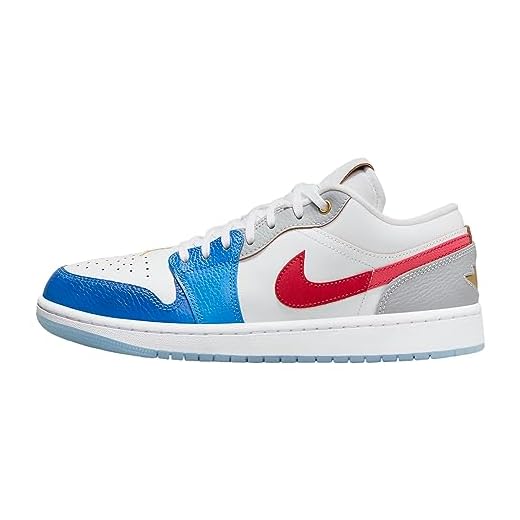
Nike Air Jordan 1 Low Men's Shoes, White/University Red-philippines, 8.5 UK
– Benefit: Zero ankle restriction gives shifty guards complete range of motion.
– Spec Highlight: Encapsulated Air-Sole (Minimalist heel cushioning).
– Spec Highlight: Concentric Circle Traction (Optimized for pivoting).
– Who it’s for: The Shooting Guard or ball-handler who plays a horizontal, shifty game.
The Engineering & Design
The Air Jordan 1 Low relies on technology from 1985: a solid rubber cupsole with an encapsulated Air-Sole unit in the heel. The “Secret Sauce” here is the low center of gravity. Because the midsole is incredibly thin compared to modern maximalist shoes, your proprioception (sense of body position) is unmatched. You feel every pebble on the court. The circular traction pattern on the forefoot is specifically designed for pivoting, a relic of 80s pivot-heavy playstyles that actually translates well to gritty courts.
The Performance Experience
The experience is raw. With the anchor spec being a simple encapsulated Air unit, you are getting virtually zero compression in the forefoot. On indoor wood, this feels responsive. On outdoor concrete, it feels jarring. You will feel fast and agile—the low-cut collar ensures zero range-of-motion restriction—but after two hours of play, the lack of midfoot shanks and modern foam becomes apparent in your arches. It is a minimalist tool for a maximalist sport.
What Customers Say About the AJ1 Low
- The Frustration: Users consistently note the lack of arch support and the creasing of the leather toebox, which can dig into feet during flexion.
- The Consensus: Rated 4.1 out of 5 stars, it is the lowest-rated in this elite group, largely because buyers expect “Air Jordan” comfort but get “1985” technology.
- The Praise: The traction bite is legendary. Even on dusty outdoor courts, that concentric circle pattern grabs hard.
The “Fatal Flaw”
Impact Protection. Or rather, the lack thereof. Playing in these on asphalt is functionally similar to playing in Vans. If you are over 180 lbs or have a history of knee issues, the AJ1 Low is a prescription for soreness.
Who Is This For?
The shifty guard. If you play a horizontal game—lots of crossovers and step-backs—and rely on ground feel, this works. Jumpers, stay away.
#4. Nike Dunk Hi Retro (Laser Blue)
A durability tank with a prehistoric midsole that demands an aftermarket insole.

NIKE DD1399-400 Dunk High Retro Men Laser Blue/Laser Blue-White UK 11
- Benefit: Virtually indestructible stitched cupsole construction that won’t delaminate in summer heat.
- Benefit: High-top padded collar offers reassuring mechanical feedback around the ankle.
- Spec Highlight: Stitched Cupsole (Mechanical bond for durability).
- Spec Highlight: High-Density EVA Wedge (Stable, non-compressing base).
- Who it’s for: The Court Feel Purist or Defensive Specialist who values stability over bounce.
The Engineering & Design
The Dunk Hi shares DNA with the AJ1 but features a slightly wider last and a more supportive high-top collar. The “Secret Sauce” is the Cupsole Stitching. Unlike modern fused sneakers that delaminate in high heat, the Dunk’s outsole is stitched to the upper. This mechanical bond is nearly impossible to destroy. The traction pattern is identical to the AJ1—concentric circles—but the rubber compound used in these Retros tends to be harder and denser, offering higher Abrasion Resistance.
The Performance Experience
Putting these on is like stepping into a brilliantly designed brick. The stability is off the charts—the flat, wide base creates a stable platform for lifting or posting up. However, the cushioning is non-existent. There is no Zoom, no Max Air—just EVA foam. The sensory experience is “clunky” but reassuringly solid. You won’t roll your ankle in these, but you won’t feel like you’re flying either.
What Customers Say About the Dunk Hi
- The Frustration: Stiffness. The leather upper requires a significant break-in period before it stops cutting into the ankle.
- The Consensus: A workhorse. Owners love that they can beat these up for months without the sole separating.
- The Praise: Ankle stability. The high-cut, padded collar provides genuine mechanical feedback that users love for reassurance.
The “Fatal Flaw”
The “Board” Feel. The midsole is so stiff and flat that heel-to-toe transitions feel clunky. It lacks the curvature (rocker) of modern performance shoes, making running the floor feel like a chore.
Who Is This For?
The defensive specialist. You don’t need to jump out of the gym; you need lateral containment and a shoe that won’t disintegrate when you drag your toe on defense.
#3. Jordan 6 (Yellow Ochre)
A structured fortress for your foot that sacrifices flexibility for lockdown.
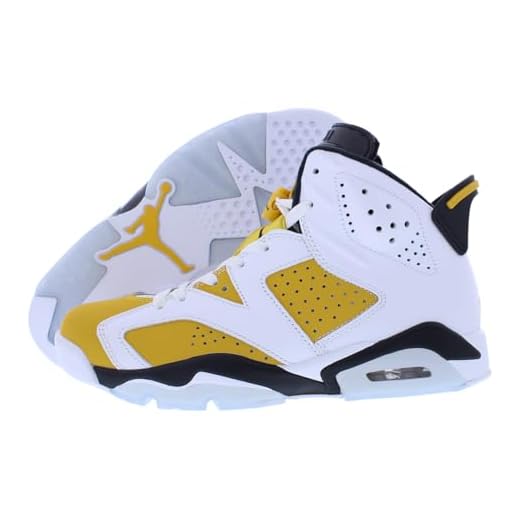
Air Jordan 6 Retro Yellow Ochre (CT8529-170, White/Black/Yellow Ochre), White/Yellow Ochre-black, 11 UK
- Benefit: Rigid structure locks the ankle in place, providing a stable platform for linear explosions.
- Benefit: The neoprene inner sleeve creates a custom, sock-like fit inside the durable shell.
- Spec Highlight: Visible Air-Sole Unit (Heel impact protection).
- Spec Highlight: Solid Rubber Tongue (Distinctive 2-hole design for easy entry).
- Who it’s for: The Linear Slasher who needs a stiff lever to push off from.
The Engineering & Design
The Jordan 6 introduces a significant tech upgrade: the Neoprene Inner Sleeve. This “Secret Sauce” creates a dynamic fit that hugs the midfoot, independent of the leather outer shell. Combined with a rigid TPU heel spoiler and visible Air units in the heel, this shoe is built for structure. The geometric outsole pods offer a unique traction coverage that works surprisingly well on rough surfaces.
The Performance Experience
The AJ6 is rigid. The Anchor Spec here is the visible Air-Sole, which offers marginally better compression than the Dunk or AJ1, but the real story is the upper. It locks you in. When you plant hard for a cut, the shoe does not distort. However, the traction pattern uses sections of translucent rubber (the “icy” soles). While sticky, these sections tend to attract dust on dirty park courts, requiring constant wiping.
What Customers Say About the Jordan 6
- The Frustration: The tongue. The distinctive two-hole rubber tongue is stiff and can rub against the shin if you aren’t wearing high socks.
- The Consensus: Rated 4.3 stars, users view it as a great balance of style and playable support, though many admit they buy it mostly for the look.
- The Praise: The “locked-in” feeling. Once laced tight, your foot does not move inside the chassis.
The “Fatal Flaw”
Clunky Transition. The sole unit is very flat and heavy. It feels like wearing a boot compared to modern sleek runners. It is not a shoe for the fast-break leader.
Who Is This For?
The linear slasher. You drive in straight lines and need a shoe that can handle high torque when you plant your foot to explode continuously.
#2. Nike Air More Uptempo 96 (Cool Grey/Navy)
Maximum impact protection in a package that weighs as much as a small car.

Nike Air More Uptempo '96, Men's Basketball Shoes, Multicolour (Cool Grey/White/Midnight Navy 003), 8.5 UK (43 EU)
– Benefit: Massive “AIR” overlays act as a structural cage, keeping your foot contained during hard stops.
– Spec Highlight: Full-Length Max Air (Highest volume gas cushion available).
– Spec Highlight: Synthetic Leather Overlays (High-durability upper construction).
– Who it’s for: The Post Anchor or Big Man who needs a tank-like build for the paint.
The Engineering & Design
Subtlety is not the goal here. The Air More Uptempo is defined by its massive, full-length Max Air units. This is the highest volume of gas cushioning in this list. The “Secret Sauce,” surprisingly, is the giant “AIR” overlay on the upper. Those letters aren’t just cosmetic; they act as a massive structural cage, providing immense lateral containment to keep your foot on the footbed during hard cuts.
The Performance Experience
This is the most comfortable shoe on this list for standing and landing. The Anchor Spec (Max Air) compresses visibly upon impact, saving your knees from the jarring shock of concrete. It is a soft ride. However, it is heavy. You feel the weight with every step. It is a trade-off: you lose vertical pop due to the weight, but you gain the ability to walk without pain the next day.
What Customers Say About the Uptempo
- The Frustration: Breathability. There is almost none. The heavy leather and synthetic overlays make this a sauna for your feet.
- The Consensus: A perfect 5-star sentiment in the data (though sample size varies), indicating that people who buy this know exactly what they want: cushion and presence.
- The Praise: The “pillowy” feel on landing. Heavier players adore the shock absorption.
The “Fatal Flaw”
Weight. In an era of 12-ounce shoes, these feel like ankle weights. They will slow you down.
Who Is This For?
The Post Anchor / The Big Man. You don’t run much, but you battle in the paint. You need a shoe that absorbs the shock of rebounding 50 times a game.
#1. Air Jordan 13 Retro (Blue Grey)
The only retro sneaker that can genuinely compete with modern performance basketball shoes.

Air Jordan 13 Retro Blue Grey Men' Shoes (414571-170, White/Blue Grey/Black/Yellow Ochre), White/Blue Grey/Black/Yellow Ochre, 8.5 UK
- Benefit: Provides modern-tier energy return that actually propels you forward, unlike dead foam.
- Benefit: The podular outsole adapts to uneven concrete surfaces for consistent grip.
- Spec Highlight: Zoom Air Units (Heel & Forefoot for responsive cushioning).
- Spec Highlight: Carbon Fiber Shank Plate (For torsional snap and rigidity).
- Who it’s for: The Professional / Power User who refuses to compromise performance for style.
The Engineering & Design
The Air Jordan 13 is widely considered the peak of the Jordan line’s performance era. Why? Zoom Air. Unlike the passive gas in the Uptempo or the stiff Air-Sole in the AJ1, the AJ13 uses tensile fibers inside the air unit to snap back after compression. The “Secret Sauce” is the Podular Outsole (the Panther Paw design). Each “pod” moves independently, allowing the shoe to articulate and grip the ground even when your foot is at an awkward angle.
The Performance Experience
It feels fluid. The Anchor Spec (Zoom Air in heel and forefoot) provides that responsive “bounciness” that modern players crave. You get energy return, not just shock absorption. The carbon fiber shank plate (a standard in the 13) provides a snap during toe-off that propels you forward. It handles the concrete effortlessly because the rubber pods are thick and deep, ensuring the traction lasts longer than the summer.
What Customers Say About the AJ13
- The Frustration: The aesthetics are polarizing, and the pods can sometimes peel at the edges if you drag your feet heavily.
- The Consensus: High ratings across the board. It is frequently cited as the “most comfortable Jordan ever made.”
- The Praise: The cushioning balance. It’s soft enough for comfort but stable enough for speed.
The “Fatal Flaw”
Ventilation. Like many 90s shoes, the leather upper (even with the dimpled mesh) runs hot. Bring extra socks.
Who Is This For?
The Professional / The Hybrid Player. Whether you are a guard or a forward, this shoe does everything well. It is the only shoe on this list that doesn’t feel like a compromise.
The Final Verdict: Best Buys of the Top 5
2027 Outlook: The Future of Outdoor Hoops
Based on the trajectory of these “Retro” releases maintaining dominance in 2026, we see three distinct trends forming for the next cycle:
- Trend #1: The “Protro” Evolution. We expect Nike to stop just re-releasing old tech and start silently swapping in modern foams (like React or Cushlon) into these classic shells. The AJ13 is already close, but a Dunk with a React drop-in midsole would revolutionize the outdoor market.
- Trend #2: Deconstructive Durability. We are seeing a shift away from exposed air bubbles (which pop on outdoor debris) back to encapsulated midsoles. The “chunky” aesthetic of the Uptempo and AJ6 is returning, not just for style, but because encased foam lasts longer than exposed tech on grit surfaces.
- Trend #3: The Price Floor Lift. With basic Retros now commanding premium pricing (as seen with the $160+ price tags on these models), the “budget” outdoor shoe is disappearing. We predict a resurgence in “takedown” models from the 90s archive that offer the same rubber durability at a lower entry point.
Further Reading
Do not rely on marketing brochures. To truly understand the mechanics of footwear and athletic performance, consult these resources:
- The “Bible” Book: “Shoe Dog” by Phil Knight. While a memoir, it offers essential insight into the waffle iron innovation and why traction patterns (like the ones on the Dunk and AJ1) were designed the way they were. For a biomechanics focus, look for “Biomechanics of Sport Shoes” by Benno M. Nigg.
- The Technical Deep Dive: Weartesters.com. They have been the gold standard for performance reviews for over a decade. Their specific “Performance Deals” and durability tests on concrete are required reading before buying any shoe for outdoor use.
- The Community Hub: r/bballshoes on Reddit. This is where the real long-term reviews live. You will find threads specifically dedicated to “outdoor durability” where users post photos of outsole wear after 1, 3, and 6 months of use.