
The 5 Best Men’s Running Shoes for Beginners (2026 Edition)
Beginners don’t need speed; they need armor. We ignored the “super shoe” hype and analyzed the underlying engineering of the top 2026 models to find the 5 options that prioritize biomechanical health over raw speed.

This post may contain affiliate links. If you make a purchase through these links, we may earn a commission at no additional cost to you.
It starts with a dull ache in the shins. Then, a sharp pain in the heel. For most beginners, the running habit doesn’t die because of a lack of willpower; it dies because of mechanical failure.
The entry-level running shoe market in 2026 is a minefield of marketing fluff. Brands are obsessed with “Super Foams” and carbon plates designed for sub-2-hour marathoners, yet they market them to guys who just want to finish a 5K without needing an ice pack. Here is the hard truth: As a beginner, you do not need “propulsion.” You need impact attenuation and gait guidance. You don’t need a Ferrari; you need a Toyota Land Cruiser.
We ignored the “energy return” hype and analyzed the underlying chassis engineering of the top sellers to find the only 5 options that prioritize your biomechanical health over raw speed. These are the tools that will keep you on the road long enough to actually call yourself a runner.
TL;DR: The Quick Verdicts
| Rank & Product | Best For… | The “One-Line” Verdict |
|---|---|---|
| 1. Brooks Ghost 15 | The “Everyman” | The Honda Civic of running: boring, reliable, and practically impossible to break. |
| 2. Brooks Adrenaline GTS 25 | The Overpronator | A guidance system that corrects your form without forcing your foot into submission. |
| 3. ASICS Novablast 2 | The Energy Seeker | A trampoline for your feet that makes slow miles feel deceptively fast. |
| 4. Brooks Glycerin GTS 20 | The Heavy Hitter | Nitrogen-infused luxury for heavier runners who need maximum joint protection. |
| 5. Brooks Adrenaline GTS 22 | The Budget Play | Older tech that still outperforms 90% of budget bin shoes at half the price. |
The Lab Standard: How We Grade Quality
We don’t use vague terms like “comfortable.” We evaluate based on three specific mechanical engineering metrics critical for beginners:
- Shore A Hardness: The measure of the midsole foam’s density. Too soft (<30), and the shoe bottoms out, straining your Achilles. Too hard (>55), and your knees absorb the shock. We look for the “Goldilocks” zone of 35-45 Shore A.
- Torsional Rigidity: The shoe’s resistance to twisting. A beginner’s foot muscles are undeveloped; they need a chassis that resists collapsing inward (overpronation) when fatigue sets in at mile 2.
- Upper Breathability Index: A heat-retention score. Friction + Sweat = Blisters. We look for engineered mesh that vents heat efficiently to prevent the “hot spots” that end runs early.
1. Brooks Ghost 15
The safest investment you can make if you don’t know your foot type.

Brooks Men's Ghost 15 Neutral Running Shoe, Black/Phlox/Oriole, 7 UK
- Benefit: Provides a “disappearing” sensation on the foot, allowing you to focus purely on the run.
- Benefit: Incredible durability that withstands 400+ miles of daily pounding.
- Spec Highlight: Segmented Crash Pad for customized shock absorption.
- Spec Highlight: DNA LOFT v2 cushioning for a dampening, neutral ride.
- Who it’s for: The Neutral Novice who wants a reliable, worry-free daily driver.
The Engineering & Design
The Secret Sauce here is the Segmented Crash Pad. Unlike shoes with a single slab of foam, the Ghost 15’s outsole is caterpillar-shaped, composed of independent shock absorbers that work together to customize your landing. This, paired with the DNA LOFT v2 cushioning (a proprietary mix of rubber, air, and foam), creates a transition so smooth it feels almost invisible.
The Performance Experience
Running in the Ghost 15 is aggressively neutral. The 12mm midsole drop is high by modern standards, but for a beginner, this is a feature, not a bug—it offloads strain from the calf and Achilles. You won’t feel a “bounce” or “pop.” Instead, you feel a muted, dampening sensation. It simply erases the pavement. It handles 9-minute miles and 12-minute miles with the exact same level of composed stability.
What Customers Say About The Ghost 15
- The Frustration: Many runners note the colorways are “Dad-core” at best, lacking the aggressive aesthetics of competitors.
- The Consensus: It is widely regarded as the “set it and forget it” shoe. Owners report getting 400+ miles before the foam compresses.
- The Praise: The “step-in feel.” Reviewers consistently mention that it requires zero break-in period.
The “Fatal Flaw”
It is mechanically uninspiring. If you are looking to pick up the pace for interval training, the foam feels “dead” and unresponsive. It absorbs energy rather than returning it.
Who Is This For?
The Neutral Novice. If you have high arches and want a shoe that disappears on your foot, this is it.
2. Brooks Adrenaline GTS 25
The “One-Line” Verdict: The gold standard for stability, updated with softer geometry.

Brooks Men’s Adrenaline GTS 25 Supportive Running & Walking Shoe, Primer Grey/Ebony/Jasmin, 8.5 Wide
- Benefit: actively corrects gait mechanics when fatigue sets in, protecting knees and hips.
- Benefit: Offers a confidence-inspiring “hug” around the arch for superior foot security.
- Spec Highlight: GuideRails® Support System acts as a bumper for your heel rotation.
- Spec Highlight: Updated midsole geometry for a smoother, less intrusive transition.
- Who it’s for: The Overpronator or anyone with a history of knee/shin injuries.
The Engineering & Design
The Anchor Spec here is the GuideRails® Support System. Traditional stability shoes use a hard plastic post under the arch (medial post) which feels obtrusive. The GTS 25 uses firm foam rails along the outside of the heel to keep your rotation in check, much like bumpers in bowling. This 25th iteration integrates the rails more seamlessly into the midsole than previous versions.
The Performance Experience
The GTS 25 offers a distinct “hug” around the arch. When you get tired and your form degrades (knees caving in), you can physically feel the GuideRails gently nudging your foot back to center. It provides a level of confidence on uneven sidewalks that neutral shoes lack. The transition is stiffer than the Ghost, but the trade-off is superior knee protection.
What Customers Say About The Adrenaline GTS 25
- The Frustration: Some users find the toe box slightly shallower than previous years, causing pressure on the big toe nail.
- The Consensus: The definitive “knee-saver.” Long-time runners with joint issues refuse to run in anything else.
- The Praise: The stability-to-weight ratio. It supports like a hiking boot but runs like a light trainer.
The “Fatal Flaw”
The price creep. As the flagship stability model, the GTS 25 commands a premium that pushes the boundary of “entry-level.”
Who Is This For?
The Overpronator. If you have flat feet or your knees knock together when you squat, you need this mechanical intervention.
3. ASICS Novablast 2
The “One-Line” Verdict: A wild, bouncy ride for the runner who wants to have fun.
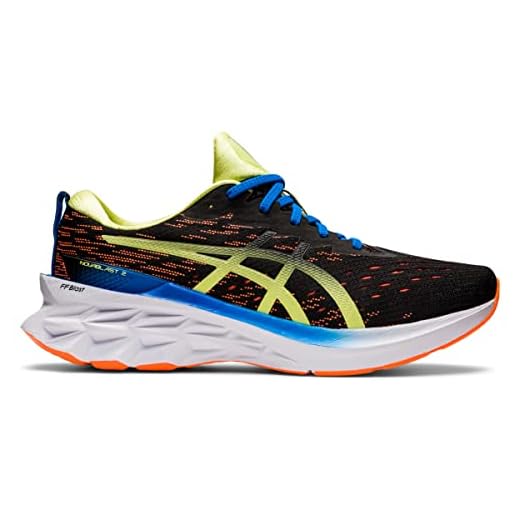
ASICS Men's NOVABLAST 2 Running Shoes, 11.5, Black/Shocking Orange
- Benefit: Makes running feel “fun” and energetic rather than a chore.
- Benefit: Generates massive vertical energy return to propel you forward.
- Spec Highlight: FF BLAST™ technology provides a trampoline-like effect.
- Spec Highlight: 8mm drop encourages a faster, more athletic mid-foot strike.
- Who it’s for: The Energy Seeker who needs sensory feedback to stay engaged.
The Engineering & Design
The star here is FF BLAST™ technology. This is a low-density, high-rebound foam that acts like a trampoline. The “Secret Sauce” is the Trampoline Pod Outsole—the center of the heel is recessed, allowing the foam to splay out and bounce back upon impact, generating significant vertical energy return.
The Performance Experience
This is the antithesis of the Brooks Ghost. It feels unstable, wobbly, and incredibly alive. Every step feels like you are being launched forward. The 8mm drop encourages a more mid-foot strike. For a beginner, this shoe makes running feel less like a chore and more like play. However, that bounce comes at the cost of lateral stability; cornering tight turns can feel sketchy.
What Customers Say About The Novablast 2
- The Frustration: “Instability.” Several users reported rolling their ankles on uneven terrain due to the high stack height and soft foam.
- The Consensus: The most “fun” shoe on the list. It makes slow paces feel faster.
- The Praise: The aesthetic and the cushion depth. Heavy heel strikers love the massive slab of foam under the rear foot.
The “Fatal Flaw”
Lateral instability. If you have weak ankles or run on trails/cambered roads, this shoe will fight you.
Who Is This For?
The Bored Beginner. If you find running tedious, the sensory feedback of the Novablast will keep you engaged.
4. Brooks Glycerin GTS 20
The “One-Line” Verdict: Maximum cushioning meets maximum support.

Brooks Men's Glycerin Gts 20 Running Shoe, Blue Depths Palace Blue Orange, 10.5 UK
- Benefit: Delivers the maximum possible impact protection for heavier runners.
- Benefit: Nitrogen-infused foam creates a consistent, plush feel that doesn’t bottom out.
- Spec Highlight: Nitrogen-Infused DNA LOFT v3 for superior cell uniformity and weight reduction.
- Spec Highlight: 3D Fit Print upper for a seamless, structural fit.
- Who it’s for: The Heavy Hitter or recovery runner needing joint preservation.
The Engineering & Design
This shoe features Nitrogen-Infused DNA LOFT v3. By injecting nitrogen into the foam during the molding process, Brooks created a cell structure that is uniform, larger, and lighter. This results in a “Plush” experience that absorbs significantly more impact force than standard EVA foams, paired with the same GuideRails found in the Adrenaline.
The Performance Experience
It feels like running on memory foam that doesn’t bottom out. The 3D Fit Print upper is plush and thick—perhaps too thick. The ride is disconnected from the ground; you won’t feel rocks or cracks in the pavement. It is a cruiser, designed for recovery days or heavier runners who need to minimize the G-forces on their skeletal system.
What Customers Say About The Glycerin GTS 20
- The Frustration: Heat retention. The plush upper traps heat, making it a poor choice for summer running in hot climates.
- The Consensus: “Running on clouds.” It is widely cited as the best shoe for recovery runs after a hard workout.
- The Praise: The wideness of the base provides a stable platform despite the high cushion stack.
The “Fatal Flaw”
Weight. It is heavy. You will feel the extra ounces at the end of a long run.
Who Is This For?
The Heavy Hitter. If you are a larger runner (200lbs+), the nitrogen foam will offer protection that standard foams cannot matching.
5. Brooks Adrenaline GTS 22
The “One-Line” Verdict: The smart budget choice that sacrifices almost nothing.

Brooks Men's Adrenaline GTS 22 Supportive Running Shoe, Blue/Light Blue/Orange, 12 UK
- Benefit: Delivers 95% of the performance of the flagship model at a fraction of the price.
- Benefit: Stiff heel counter locks the foot in place better than many softer modern shoes.
- Spec Highlight: DNA LOFT v1 offers a firmer, more traditional stability feel.
- Spec Highlight: Classic GuideRails system for proven pronation control.
- Who it’s for: The Value Hunter who wants premium support on a budget.
The Engineering & Design
While older, the GTS 22 still utilizes the core GuideRails system and DNA LOFT (v1). The “Secret Sauce” here is the reliability of the build. It lacks the nitrogen infusion of the Glycerin or the refined upper of the GTS 25, but the chassis geometry is nearly identical.
The Performance Experience
It feels firmer and more traditional than its younger siblings. The ride is “slappy”—you can hear your foot hitting the pavement—but the support is undeniable. For a beginner running 10-15 miles a week, the difference in foam technology between the 22 and the 25 is negligible compared to the price savings.
What Customers Say About The Adrenaline GTS 22
- The Frustration: The laces. A common complaint is that the stock laces are too short and slippery, coming undone easily.
- The Consensus: The best value in the support category. A workhorse that lasts 500 miles.
- The Praise: The heel counter stiffness. It locks the heel in place better than many modern, softer shoes.
The “Fatal Flaw”
Stiffness. It lacks flexibility in the forefoot, which can make the toe-off phase feel a bit clunky.
Who Is This For?
The Value Hunter. You get 95% of the performance of the GTS 25 for 60% of the cost.
The Final Verdict: Best Buys of the Top 5
2027 Outlook: The Future of Entry-Level Running
Based on the trajectory from the GTS 22 to the GTS 25, here is where the industry is heading:
- Trend #1: The Death of the Medial Post. The “GuideRail” philosophy (peripheral support vs. under-arch support) will become the industry standard. Expect hard plastic supports to vanish entirely.
- Trend #2: Nitrogen for Everyone. Currently reserved for premium lines (Glycerin), nitrogen-infusion processes will become cheaper, trickling down to mid-range shoes like the Ghost series to reduce weight.
- Trend #3: “Prescription” Uppers. 3D printing will allow for uppers that adapt to foot swelling during a run, addressing the “too tight” complaints common in the GTS 25 reviews.
Further Reading
Don’t trust the hype. Trust the physics.
- The “Bible” Book: “Anatomy for Runners” by Jay Dicharry. It explains the “why” behind the mechanics of your stride better than any blog post.
- The Technical Deep Dive: RunRepeat.com. They cut shoes in half with a bandsaw and measure foam density with a durometer. Essential data.
- The Community Hub: r/RunningShoeGeeks on Reddit. This is where the obsessives gather. If a shoe has a durability issue, you will hear about it here first.