



Slurry Pumps: Engineering for the Relentless Reality of Abrasion
Slurry pumps occupy a peculiar position in industrial machinery. They are rarely the most visible or the most celebrated component of a plant, yet when one fails, the entire mineral processing circuit, ash handling line, or dredging operation can grind to a halt. The defining challenge is not simply moving liquid—it is moving liquid that is actively trying to destroy the machine from the inside out.
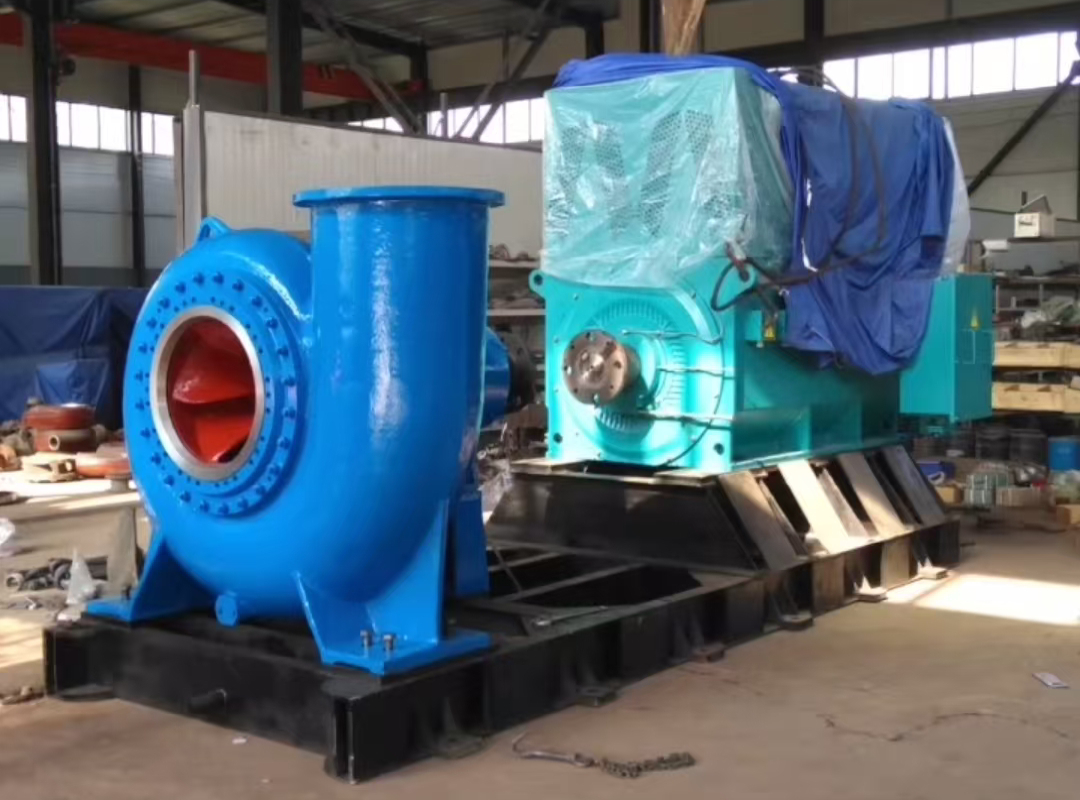
A definition grounded in consequence
A slurry pump is a heavy-duty device engineered to convey a liquid carrying suspended solid particles—often abrasive, sometimes corrosive, and frequently both. The severity of the duty is not incidental. In heavy-duty applications, slurries may exceed 20% solids by weight, with relative solid densities above 2.0 and particle sizes that place relentless mechanical stress on every wetted surface. This is why slurry pumps are not merely reinforced water pumps. Their casings are thicker, their impellers are slower and more open, and their internal clearances are deliberately generous—not because precision is unimportant, but because wear is inevitable and the machine must remain functional as its geometry changes.
Two technological paths, one shared adversary
The slurry pump landscape is divided between two fundamentally different approaches: centrifugal (rotodynamic) pumps and positive displacement (PD) pumps. Centrifugal slurry pumps dominate the field because they handle large volumetric flows with relatively simple construction and lower initial cost. They accelerate the slurry radially outward through a rotating impeller, converting kinetic energy into pressure. Their limitations are equally clear: pressure ceilings typically around 7 MPa (70 bar), and a performance envelope that narrows as slurry density and viscosity rise.
Positive displacement pumps take the opposite trade-off. They move a fixed volume of material per cycle, which makes them inherently suited to high pressures—up to 30 MPa in some configurations—and long pipeline distances where the slurry must be pushed rather than flung. PD pumps often achieve higher efficiencies (85–95%) than centrifugal units (45–75%), but they demand cleaner operating conditions: particles larger than roughly 6–8 mm can jam valves and reduce operational life. The practical rule that has emerged from decades of field experience is that centrifugal pumps own the high-flow, moderate-pressure territory and tolerate coarse particles better, while PD pumps claim the high-pressure, long-distance, and fine-particle domains where efficiency and controllability justify higher capital and maintenance complexity.
This overlap is not static. Centrifugal designs have been pushed into higher-pressure duty through multistage configurations and improved hydraulics, while PD pumps have grown more capable of handling larger throughputs. The selection decision is therefore less about ideology and more about a sober accounting of particle size distribution, pipeline length, discharge pressure, and the operator’s tolerance for unplanned downtime.
The material question is the central question
Nowhere is the engineering seriousness of slurry pumping more evident than in the choice of wetted-part materials. A slurry pump’s useful life is, in a very direct sense, a materials science experiment conducted under production pressure.
High-chrome iron has become the default for severely abrasive duties. Its advantage is microstructural: chromium carbides with hardness in the range of 1,500–1,700 Brinell are embedded in a metallic matrix, and in heat-treated form that matrix becomes martensitic, providing both hardness and mechanical support for the carbides. The result is a material that resists the impingement of larger particles by forcing them to erode the carbides rather than the surrounding matrix. Heat-treated high-chrome impellers have been shown to outperform Ni-hard components by ratios of 2:1 to 3:1 in comparable service, a difference that translates directly into reduced parts consumption and maintenance labor.
Rubber and elastomers occupy a different niche, governed by a counterintuitive principle: softness can be a wear strategy. Natural rubber’s resilience allows it to absorb the kinetic energy of fine particles through elastic deformation rather than resisting them through hardness. For slurries with particles generally below 0.15 inches in diameter, rubber liners and impellers can outlast metals. The limitation is angular: rubber performs poorly when sharp particles strike at shallow angles with high velocity, tending to tear rather than deform. Ceramic materials, particularly silicon carbide, have emerged as a third path for combined corrosion-erosion resistance, though their brittleness and cost constrain their use to specific duty profiles.
The selection of a wear material is therefore not a generic “best available” decision. It is a duty-specific judgment about particle size, shape, velocity, impact angle, and chemical environment—and it is one of the most consequential choices an engineer makes when specifying a slurry pump.
Operation as a wear-management discipline
The operational life of a slurry pump is determined as much by how it is run and maintained as by how it is designed. Cavitation remains a persistent threat: when the available net positive suction head (NPSHa) falls below the required NPSH, vapor bubbles collapse violently against the impeller surface, producing pitting, noise, and progressive hydraulic degradation. Prevention begins upstream, with suction piping that is short, adequately sized, and free of restrictive fittings that promote turbulence and low-pressure zones.
Impeller-to-liner clearance is another critical variable that receives insufficient attention until efficiency has already declined. As wear opens the gap, recirculation increases, flow and head drop, and the pump consumes more power to do less useful work. The appropriate adjustment interval is not a universal number—it depends on slurry abrasiveness, particle size, and operating hours—but condition-based practice suggests inspection starting points of roughly 250 hours for severe abrasive service, 500 hours for moderate duty, and 1,000 hours for milder applications, with adjustment triggered by measured performance loss rather than the calendar alone. In aggressive slurries, wear-ring and liner inspections every 500–1,000 hours are a reasonable planning benchmark.
The pattern that emerges across failure analyses is that most wear problems are predictable when operators track solids concentration, velocity, clearance, vibration, leakage, and material compatibility as an integrated system rather than as isolated symptoms. A pump that vibrates beyond roughly 4.5 mm/s, for example, is not simply “running rough”; it is signalling impeller imbalance, bearing degradation, or misalignment, each of which will accelerate wear elsewhere if left unaddressed.
A market shaped by the energy transition and the cost of wear
The commercial context of slurry pumps reflects the industries they serve. The global slurry pump market is projected to grow from roughly $2.77 billion in 2025 to $3.77 billion by 2031, a compound annual growth rate of about 5.27%, with mining and mineral processing as the fastest-growing segment. The driver is not merely rising production volume but a structural shift in ore quality. As high-grade deposits are depleted, the quantity of material that must be processed to yield a given unit of metal rises, and with it the volume of abrasive tailings and concentrate that must be hydraulically transported. The energy transition amplifies this dynamic: demand for critical minerals such as copper, nickel, and lithium has directed capital toward extraction capacity, with investment in critical mineral mining expanding by roughly 10% in 2023.
Yet the same abrasive reality that creates demand also constrains profitability. The rapid deterioration of wet-end components—liners, impellers, throat bushes, and shaft sleeves—generates recurring operational expenditure that can erode the total cost advantage of a lower-priced pump. This is why the market is moving toward more durable wear materials, modular maintenance designs, and condition-monitoring architectures that allow wear to be managed predictably rather than discovered catastrophically. The pump that survives longest is not necessarily the one with the thickest casting; it is the one whose wear profile is understood, whose clearances are maintained, and whose materials were specified for the actual slurry rather than a generic “abrasive” label.
The slurry pump, in the end, is a machine defined by a negotiation with decay. Its engineering brilliance lies not in denying wear but in anticipating it—directing it, slowing it, and designing around it so that the broader industrial process can continue uninterrupted. In that sense, it is less a pump than a controlled sacrifice, and its effectiveness is measured in the tonnage moved between rebuilds.


